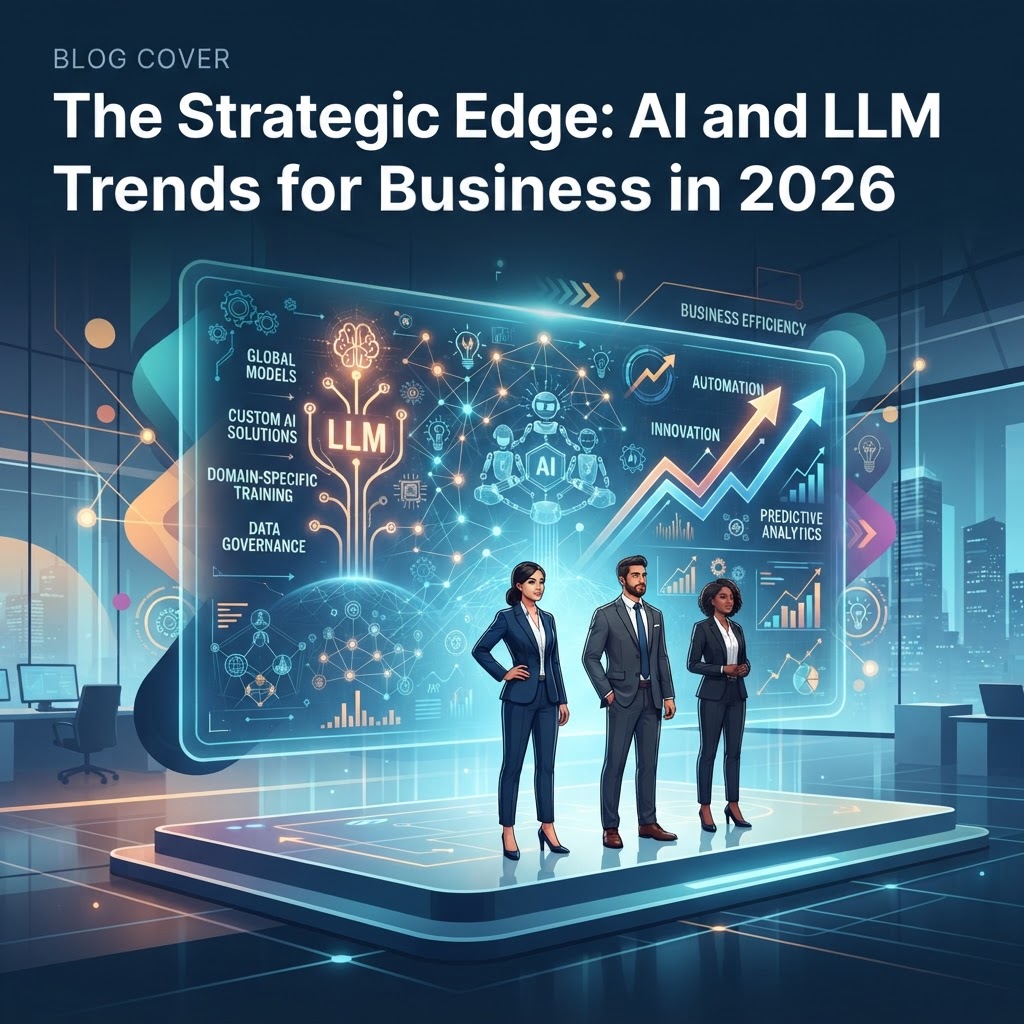
The New Frontier of Business Intelligence in 2026
As we navigate through 2026, the artificial intelligence landscape has undergone a radical transformation. We have moved well beyond the era of 'chatting with a bot.' Today, Large Language Models (LLMs) are the operating systems of modern enterprise, shifting from passive content generators to proactive, agentic entities that execute complex business processes.
1. From Chatbots to Autonomous Agents
The most significant trend in 2026 is the rise of autonomous agents. Unlike the early LLMs that simply replied to prompts, current systems utilize advanced 'reasoning engines' to plan, execute, and troubleshoot multi-step workflows. For businesses, this means an AI can now manage entire supply chain logistics, conduct end-to-end customer resolution, or perform complex data reconciliation across disparate ERP systems with minimal human oversight.
2. The Era of Domain-Specific Models
Generalist models, while powerful, are no longer sufficient for industry-leading businesses. In 2026, the competitive advantage lies in 'Small Language Models' (SLMs) and domain-specific LLMs trained on proprietary corporate data. By fine-tuning models on private internal archives, companies are achieving significantly lower latency and higher accuracy, while maintaining data sovereignty and security.
3. Multimodal Integration and Real-Time Interaction
Artificial Intelligence is now inherently multimodal. In 2026, business applications seamlessly process video, audio, and sensor telemetry alongside text. A manufacturing firm can now have an AI inspect production lines in real-time via video feeds, using LLM reasoning to identify quality deviations and trigger automatic adjustments to machinery settings.
Actionable Strategies for Business Leaders
To remain competitive, organizations must move from passive consumption to strategic implementation.
- Prioritize Data Governance: Your AI is only as good as your data. Establish rigorous data cleaning and architecture protocols today to ensure your models are fed high-quality, relevant information.
- Focus on ROI-Centric Use Cases: Don't automate for the sake of novelty. Identify high-friction, repetitive workflows that consume significant human hours and pilot agentic AI solutions in those specific pockets.
- Invest in Human-in-the-Loop Frameworks: As agents become more autonomous, the human role shifts to oversight. Build robust dashboarding systems that allow your teams to monitor AI performance and intervene where necessary.
Ethical Considerations and Regulatory Compliance
By 2026, the regulatory environment has tightened. Businesses must now account for 'AI Auditing,' where systems must be explainable and free from systemic bias. Integrating explainable AI (XAI) frameworks is no longer an optional luxury—it is a compliance requirement.
Conclusion
The maturation of AI in 2026 provides a unique opportunity to redefine productivity. By embracing agentic workflows and specialized models, businesses can unlock levels of efficiency previously thought impossible. Start small, verify your data integrity, and scale strategically to ensure your AI initiatives deliver long-term, sustainable value.