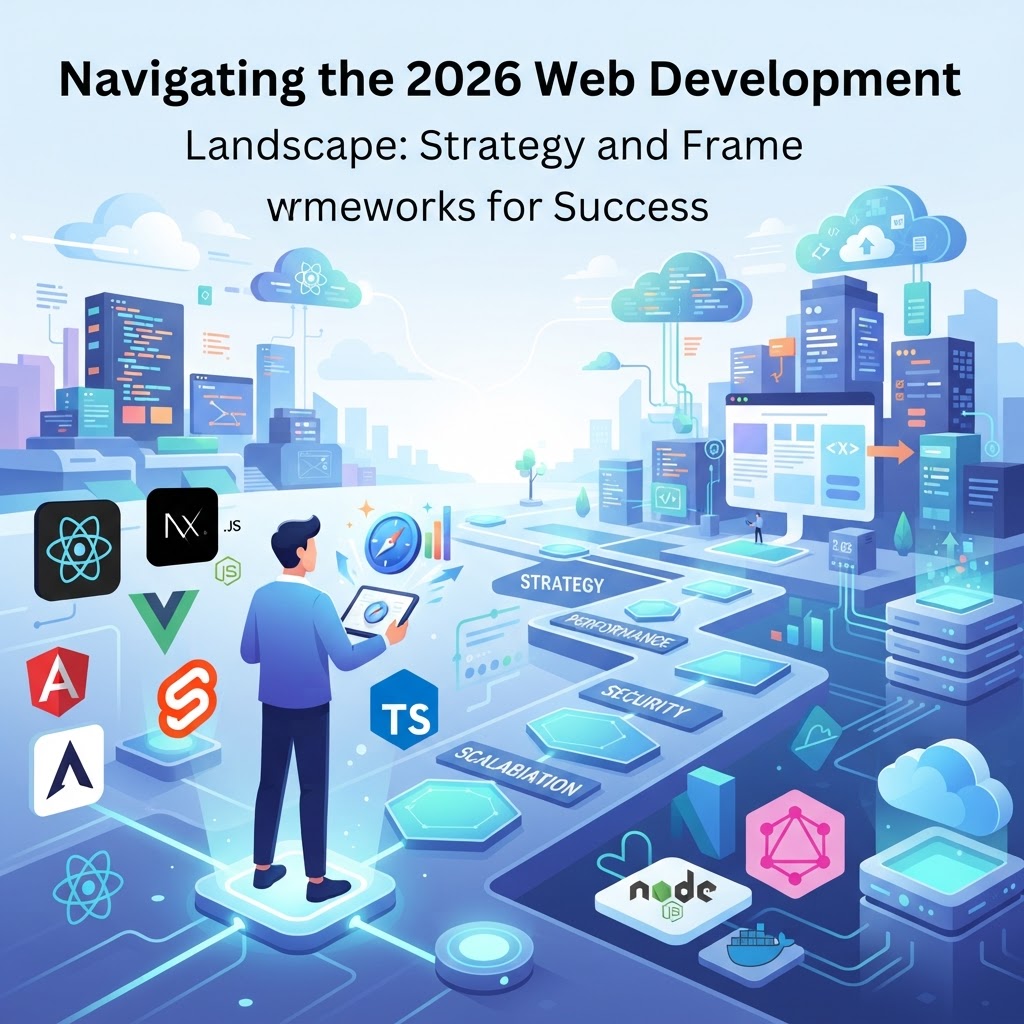
Introduction: The New Standard for Web Excellence
By 2026, the digital landscape has evolved past the 'browser-first' mentality. Modern web development is now defined by the seamless intersection of AI-assisted performance, edge computing, and strict modularity. For business owners and tech leads, understanding these trends is not just about keeping pace; it is about securing a competitive advantage.
The Framework Renaissance
React and the Server-Side Evolution
While React remains the industry standard, its implementation has shifted drastically. The dominance of Next.js 16+ has cemented the necessity of React Server Components (RSC). By shifting the heavy lifting to the server, developers are delivering near-instant interactivity, essential for high-conversion e-commerce platforms.
The Rise of Performance-First Alternatives
For projects demanding extreme optimization, frameworks like Qwik and Svelte 6 have gained significant enterprise traction. Qwik’s 'resumability' model allows for near-zero hydration time, a critical metric in 2026 where milliseconds determine user bounce rates.
Best Practices for the 2026 Enterprise
1. AI-Native Development Workflows
Development in 2026 is no longer manual. AI agents integrated into CI/CD pipelines now handle unit testing, accessibility audits, and security vulnerability patching. Teams that fail to adopt AI-assisted code review are already operating at a distinct speed disadvantage.
2. Edge-First Architecture
Latency is the silent killer of growth. Deploying your application to the Edge—using platforms like Vercel or Cloudflare Workers—moves your logic closer to the user. In 2026, a centralized server architecture is considered a technical debt liability.
3. Modular Monoliths vs. Micro-Frontends
While micro-frontends were popular, 2026 has seen a stabilization toward the 'Modular Monolith.' This architecture provides the scalability of micro-services without the immense operational complexity. It allows teams to iterate on features in isolation while maintaining a single, unified codebase.
Security and Accessibility: The Non-Negotiables
Security in 2026 revolves around 'Zero Trust' web architectures. With advanced automated attacks, client-side security (such as robust CSP headers and subresource integrity) is as vital as backend hardening. Furthermore, accessibility is no longer just a legal mandate; it is a search engine optimization (SEO) requirement. Automated accessibility testing is now integrated into every commit cycle.
Strategic Advice for Business Owners
When evaluating a technology stack for your next project, ignore the hype cycle. Instead, focus on:
- Developer Experience (DX): High DX leads to faster feature deployment.
- Sustainability: Choose frameworks with active long-term support (LTS) to avoid costly migrations every two years.
- Vendor Agnosticism: Ensure your business logic is decoupled from your cloud provider.
Conclusion
The 2026 web is faster, smarter, and more resilient than ever. By prioritizing edge-based delivery, AI-integrated workflows, and sustainable architecture, your business can build digital experiences that not only meet user expectations but define the market standard.