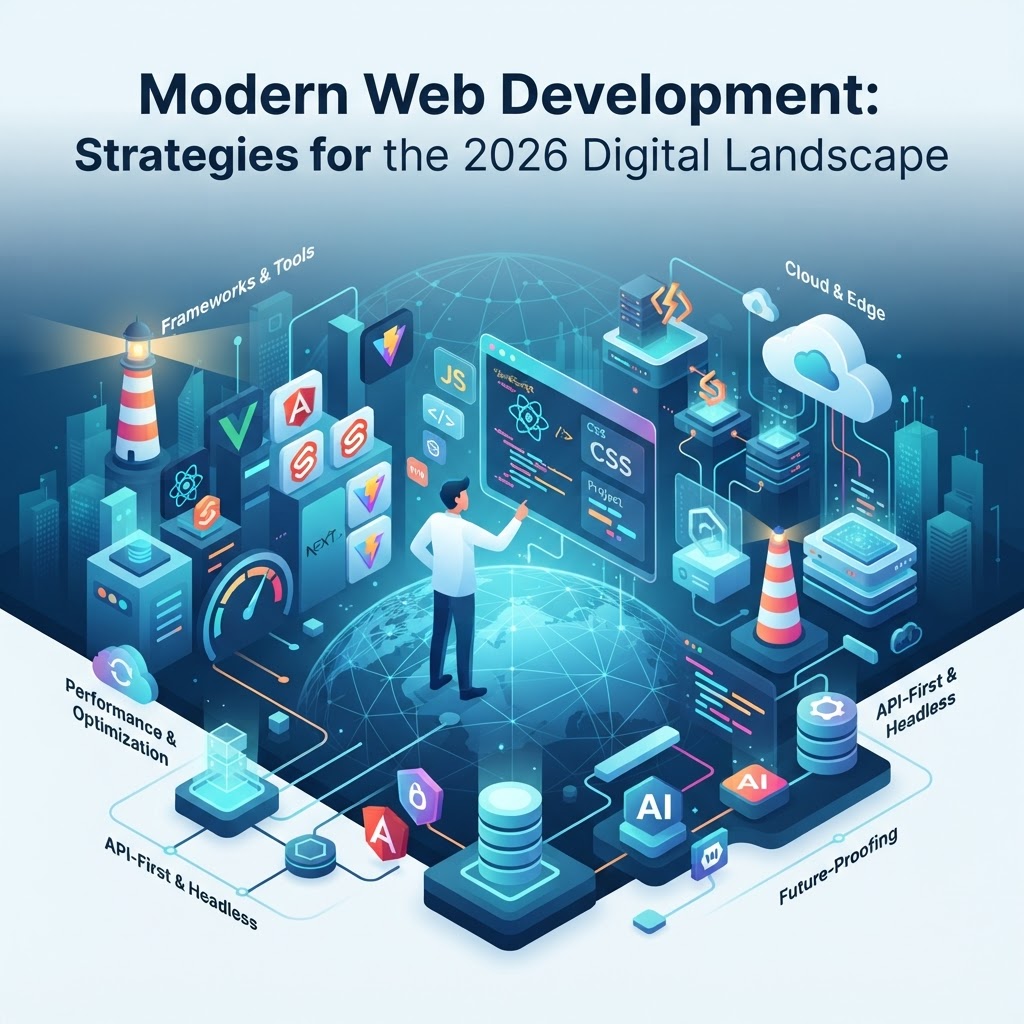
Introduction: The State of the Web in 2026
As we settle into 2026, the definition of a "performant website" has evolved from simple load speeds to complex, intelligent ecosystems. Today, web development is defined by the convergence of AI-assisted coding, edge computing, and component-based architectures. For business leaders and tech professionals, staying competitive means adopting frameworks that prioritize scalability, security, and user experience (UX) without sacrificing speed.
The Framework Evolution
In 2026, the dominance of full-stack meta-frameworks remains unchallenged. Developers no longer pick just a library; they pick an ecosystem.
1. The Rise of Server-Centric Paradigms
Modern frameworks like Next.js 16 and SvelteKit 3 have standardized Server Components. By shifting the heavy lifting of data fetching and component rendering to the server—or the edge—applications are delivering near-instant interactivity.
- Actionable Advice: Audit your current stack. If your application still sends large JavaScript bundles to the client for hydration, migrate toward server-side composition to reduce your Total Blocking Time (TBT).
2. AI-Native Frameworks
Frameworks are now being built with AI integration as a first-class citizen. Tools like the Vercel AI SDK or specialized backend wrappers for LLMs are now standard. Integrating generative features is no longer a bolt-on; it is baked into the routing and state management.
Best Practices for the Modern Enterprise
Edge-First Architecture
Latency is the silent killer of conversion rates. In 2026, deploying your backend logic to the edge is not optional—it is a business necessity. By pushing your compute to global CDN nodes, you ensure that your dynamic content is physically closer to your users, drastically improving Time to First Byte (TTFB).
Component-Driven Design Systems
Consistency at scale remains the primary challenge for enterprise web teams. Adopting a design system built on atomic design principles ensures that UI components are reusable, testable, and accessible. Utilize tools like Storybook or native Web Components to bridge the gap between design and development.
Security by Default
With the proliferation of automated threats, modern web development mandates security as a build-time process.
- Implement Content Security Policies (CSP): Prevent XSS attacks effectively.
- Automated Dependency Scanning: Use tools like Snyk or GitHub Advanced Security to catch vulnerabilities before they reach production.
Accessibility and Inclusivity
In 2026, digital accessibility (a11y) is a legal and ethical mandate. Beyond basic compliance, accessible sites drive better SEO results and higher conversion rates. Leverage automated testing tools like Playwright or Axe-core during your CI/CD pipeline to ensure every commit meets WCAG 2.2 standards.
Conclusion: Looking Ahead
To succeed in 2026, you must stop treating the web as a static document repository and start viewing it as a high-performance application. Whether you are scaling a startup or maintaining an enterprise-grade platform, focus on:
- Reducing client-side complexity.
- Leveraging server-side rendering for improved SEO and performance.
- Embedding security into your development lifecycle.
By aligning your technical roadmap with these modern best practices, you ensure that your digital presence remains resilient, scalable, and ready for the challenges of tomorrow.