The Evolving Landscape of Cloud Hosting in 2026
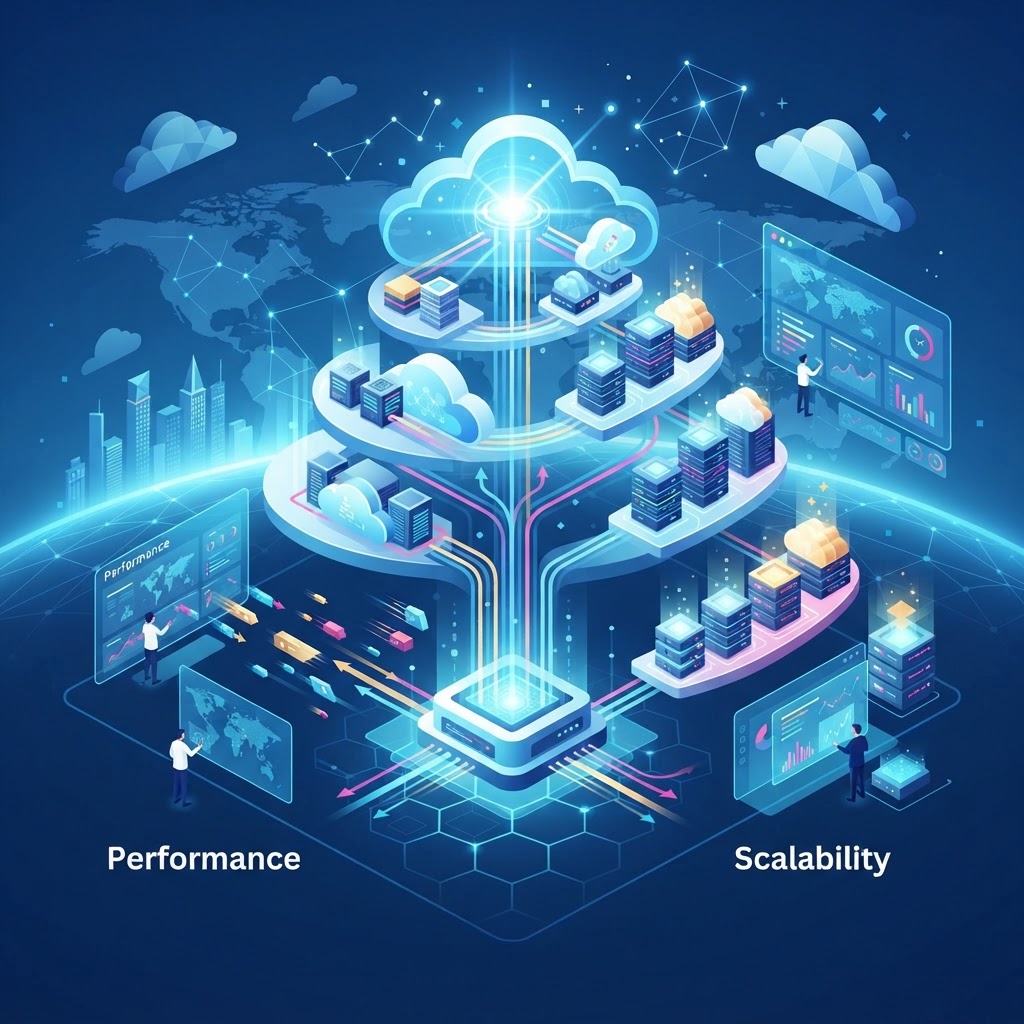
As we navigate through 2026, cloud hosting has matured from a cost-saving alternative to an essential foundation for digital transformation. With the integration of edge computing and AI-native infrastructure, the cloud is no longer just a storage space; it is a dynamic, intelligent engine driving business value. For business leaders and engineers alike, the focus has shifted from mere connectivity to high-availability architecture and sub-millisecond responsiveness.
Performance Optimization: Beyond Traditional Caching
In 2026, performance optimization is no longer about simply upgrading CPU cores or increasing RAM. It is about architectural efficiency.
AI-Powered Resource Allocation
Modern cloud providers now offer autonomous scaling services that utilize predictive machine learning to anticipate traffic spikes before they occur. By analyzing historical data patterns, these systems pre-warm server instances, eliminating the latency typically associated with auto-scaling triggers.
Edge Computing and Latency Reduction
To serve a global user base, centralized cloud environments are being supplemented by massive edge computing deployments. By moving computation closer to the end-user, businesses can reduce round-trip times (RTT) by up to 60%. This is critical for 2026 applications like real-time analytics and immersive VR/AR experiences.
Scalability: Designing for Elastic Growth
Scalability is the hallmark of modern success. If your infrastructure cannot adapt to rapid market shifts, your business is inherently fragile.
Embracing Microservices and Serverless
Monolithic architectures are becoming legacy bottlenecks. By adopting a microservices approach or moving to serverless computing (Function-as-a-Service), organizations can scale individual components of their applications independently. This modularity ensures that a surge in traffic to your payment gateway does not crash your user authentication service.
Database Scaling Strategies
Data performance remains the most common bottleneck. In 2026, distributed SQL databases have become the industry standard. These systems allow for horizontal scaling while maintaining the ACID compliance that traditional relational databases offer. Implementing read-replicas and database sharding is now a baseline expectation for high-growth enterprises.
Actionable Strategies for Business Owners
- Adopt a Multi-Cloud Strategy: Avoid vendor lock-in by utilizing a containerized architecture (e.g., Kubernetes) that allows you to deploy workloads across multiple cloud providers based on cost, latency, or compliance needs.
- Implement Observability, Not Just Monitoring: Don't just track uptime. Use AI-driven observability tools to analyze trace data, providing insights into the 'why' behind performance degradation, not just the 'when'.
- Prioritize Security by Design: Performance should never compromise security. Utilize zero-trust architecture and automated cloud security posture management (CSPM) to identify vulnerabilities in real-time.
Conclusion: The Path Forward
Cloud infrastructure in 2026 is an enabler of innovation. By focusing on AI-augmented performance, elastic scalability, and distributed edge architectures, businesses can build resilient platforms capable of weathering any storm. The tools exist today to make your infrastructure invisible and seamless; the challenge lies in shifting your mindset from resource management to value-driven automation.