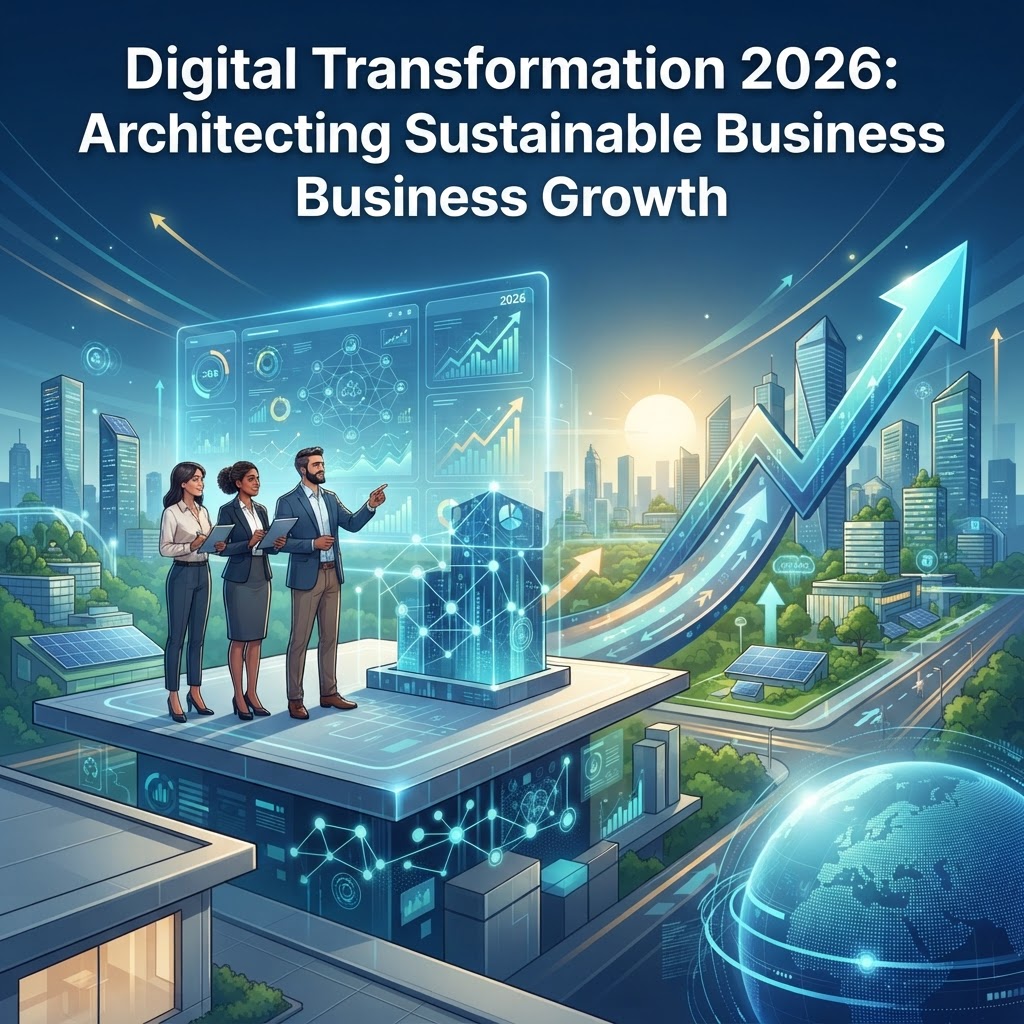
The New Paradigm of Digital Transformation in 2026
By 2026, the term 'digital transformation' has shifted from a buzzword to a fundamental operating principle. Businesses are no longer merely 'digitizing' legacy processes; they are re-engineering their entire value chains to thrive in an era defined by autonomous AI, hyper-personalization, and decentralized data architectures.
Moving Beyond Automation
Historically, companies focused on digitizing manual workflows. Today, the focus is on cognitive integration. For business owners, this means utilizing autonomous AI agents that handle cross-departmental operations—from supply chain logistics to predictive customer success models—without constant human intervention. The goal is no longer just efficiency; it is the creation of a 'self-optimizing' enterprise.
Core Pillars for Scalable Growth
1. Data Sovereignty and Governance
In 2026, data is the most volatile asset on the balance sheet. Organizations that succeed are those that prioritize data sovereignty, ensuring that information is not just collected, but actionable and compliant with the updated global privacy frameworks. Implementing a 'Data Fabric' architecture allows your business to connect disparate data sources in real-time, providing a single source of truth for decision-makers.
2. AI-Native Customer Experiences
Customers now expect hyper-personalization by default. Moving beyond simple CRM segmentation, AI-native businesses use generative models to tailor marketing messaging, pricing, and product recommendations at the individual user level in real-time. This level of intimacy is the primary driver of customer lifetime value in the current market.
3. Agile Human-Machine Collaboration
Growth in 2026 is powered by human ingenuity paired with machine velocity. The most successful organizations are investing heavily in 'upskilling' programs that teach employees how to prompt, supervise, and improve AI workflows. This is not about replacing staff; it is about elevating the human element to creative and strategic roles while machines handle the repetitive analytical heavy lifting.
Actionable Strategies for Business Leaders
- Audit Your Tech Stack for Interoperability: Use the 'API-First' approach to ensure that your cloud infrastructure, AI models, and ERP systems talk to each other seamlessly.
- Adopt 'Composable' Commerce: Break your business modules into micro-services so that you can pivot or update specific segments of your customer journey without re-platforming the entire business.
- Establish an Ethics-by-Design Framework: As AI takes a central role in your operations, ensure your algorithms are audited for bias and transparency. Building trust with your customers is a massive competitive advantage in 2026.
Conclusion: The Path Forward
The businesses that will define the next decade are those that view digital transformation as a dynamic, continuous process rather than a static goal. By fostering a culture of agility, embracing secure data practices, and leveraging the power of AI-human collaboration, you can ensure your company not only survives the rapid technological shifts of 2026 but thrives in a landscape of infinite possibility.