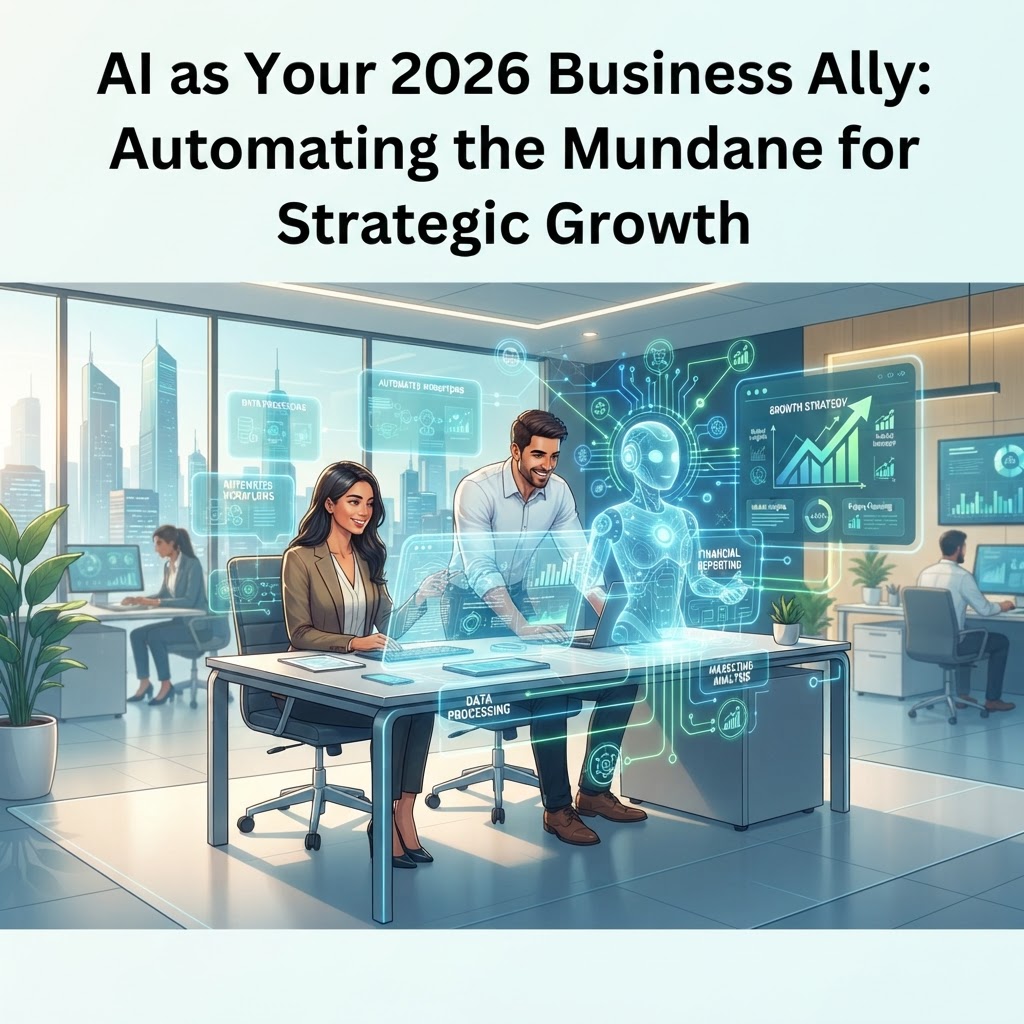
AI as Your 2026 Business Ally: Automating the Mundane for Strategic Growth
As we navigate 2026, the landscape of business operations is irrevocably shaped by artificial intelligence. For savvy business owners, AI is no longer a futuristic concept but a present-day imperative. The key to unlocking significant gains lies not just in adopting AI, but in strategically deploying it to automate the repetitive, time-consuming tasks that often bog down teams and stifle innovation. This is about freeing up human capital for higher-value work, driving efficiency, and fostering a culture of continuous improvement.
Why Automate with AI in 2026?
The business environment of 2026 demands agility, precision, and a relentless focus on customer experience. Repetitive tasks – from data entry and customer service inquiries to scheduling and basic content generation – consume valuable resources that could otherwise be directed towards strategic initiatives, product development, or personalized client engagement. AI excels at these predictable, high-volume activities, offering unparalleled speed, accuracy, and scalability. By automating these processes, businesses can achieve:
- Enhanced Efficiency: Reduce turnaround times and operational costs significantly.
- Improved Accuracy: Minimize human error in data processing and routine tasks.
- Increased Scalability: Handle growing volumes of work without proportional increases in human resources.
- Elevated Employee Satisfaction: Allow staff to focus on more engaging, strategic, and creative aspects of their roles.
- Better Customer Experiences: Provide faster, more consistent responses to customer needs.
Practical AI Automation Strategies for 2026
Let's explore concrete ways business owners can leverage AI to automate repetitive tasks, categorized by common business functions:
1. Customer Service and Support Automation
Customer service is a critical touchpoint. AI can dramatically improve response times and consistency, freeing up human agents for complex issues.
- AI-Powered Chatbots: Deploy chatbots for instant responses to frequently asked questions (FAQs), order status updates, basic troubleshooting, and appointment scheduling. Advanced AI models can understand natural language, making interactions feel more human-like. For businesses operating across diverse linguistic markets, like Canada, the USA, and parts of Latin America, ensuring your AI solution can handle multiple languages is crucial. Solutions that offer trilingual support, for instance, can streamline operations across these regions without requiring separate, specialized teams for each language.
- Automated Ticket Triage and Routing: AI can analyze incoming support tickets, categorize them based on urgency and issue type, and automatically route them to the appropriate department or agent. This drastically reduces manual sorting and ensures faster resolution.
- Sentiment Analysis for Feedback: AI tools can process customer feedback from surveys, reviews, and social media to gauge sentiment, identify recurring issues, and flag urgent customer concerns for immediate attention.
2. Marketing and Sales Automation
Streamlining marketing efforts and sales processes can lead to more effective lead generation and customer nurturing.
- Personalized Content Generation: AI can assist in generating personalized email campaigns, social media posts, and even basic blog content drafts based on customer data and predefined templates. This allows marketing teams to scale their outreach efforts.
- Automated Lead Scoring and Nurturing: AI algorithms can analyze lead behavior and demographics to score their sales-readiness, allowing sales teams to prioritize their efforts. AI can also automate personalized follow-up sequences based on lead engagement.
- Ad Campaign Optimization: AI can continuously monitor and adjust advertising bids, targeting, and creative elements across digital platforms to maximize ROI.
3. Administrative and Operational Efficiency
Behind-the-scenes tasks often represent a significant drain on resources. AI can automate many of these.
- Data Entry and Processing: AI tools can extract information from documents (invoices, forms, contracts) and input it into databases or other systems, reducing manual data entry errors and saving time.
- Automated Scheduling and Calendar Management: AI can manage meeting scheduling, send reminders, and even reschedule appointments based on participant availability and predefined rules.
- Report Generation: AI can aggregate data from various sources and automatically generate routine reports, saving analysts and managers significant time.
4. Human Resources and Onboarding
Even HR functions can benefit from AI automation.
- Candidate Screening: AI can quickly scan resumes for relevant keywords, skills, and experience, helping HR managers identify the most qualified candidates faster.
- Onboarding Automation: AI can automate the distribution of onboarding documents, schedule introductory meetings, and provide new hires with instant access to HR policies and FAQs.
Implementing AI Automation Strategically
Adopting AI for automation isn't just about picking the right tools; it's about a thoughtful, strategic approach:
-
Identify High-Impact Repetitive Tasks: Start by mapping out your business processes. Where are your teams spending the most time on repetitive, rule-based tasks? Which of these tasks, if automated, would yield the greatest efficiency gains or cost savings?
-
Define Clear Objectives: What do you aim to achieve with AI automation? Is it faster customer response times, reduced operational costs, or improved data accuracy? Setting clear, measurable goals will guide your implementation.
-
Start Small and Scale: Don't try to automate everything at once. Begin with one or two well-defined processes. Pilot the AI solution, gather feedback, and refine the implementation before expanding to other areas.
-
Prioritize Data Quality and Security: AI models are only as good as the data they are trained on. Ensure your data is clean, accurate, and securely managed. For businesses operating across borders, understanding data privacy regulations in different regions (e.g., GDPR in Europe, CCPA in California) is paramount.
-
Focus on Human-AI Collaboration: AI should augment, not replace, human capabilities. Train your employees on how to work with AI tools, understand their outputs, and handle exceptions. The goal is to empower your workforce, not to displace it.
-
Choose the Right Infrastructure: Implementing AI solutions often requires robust, scalable infrastructure. This can include cloud-based platforms that offer managed services, ensuring you have the necessary computing power and technical support without the overhead of managing it all yourself. Leveraging providers with expertise in multilingual environments can further simplify deployment for businesses with a diverse customer base.
The Future is Augmented
In 2026, businesses that effectively integrate AI for automation will gain a significant competitive advantage. They will be more agile, efficient, and better equipped to meet the evolving demands of the market and their customers. By thoughtfully identifying and automating repetitive tasks, you can unlock new levels of productivity, innovation, and growth.
Ready to explore how AI-driven automation can specifically benefit your business operations and help you navigate the complexities of global markets? Discover how tailored solutions can provide the efficiency and support you need.